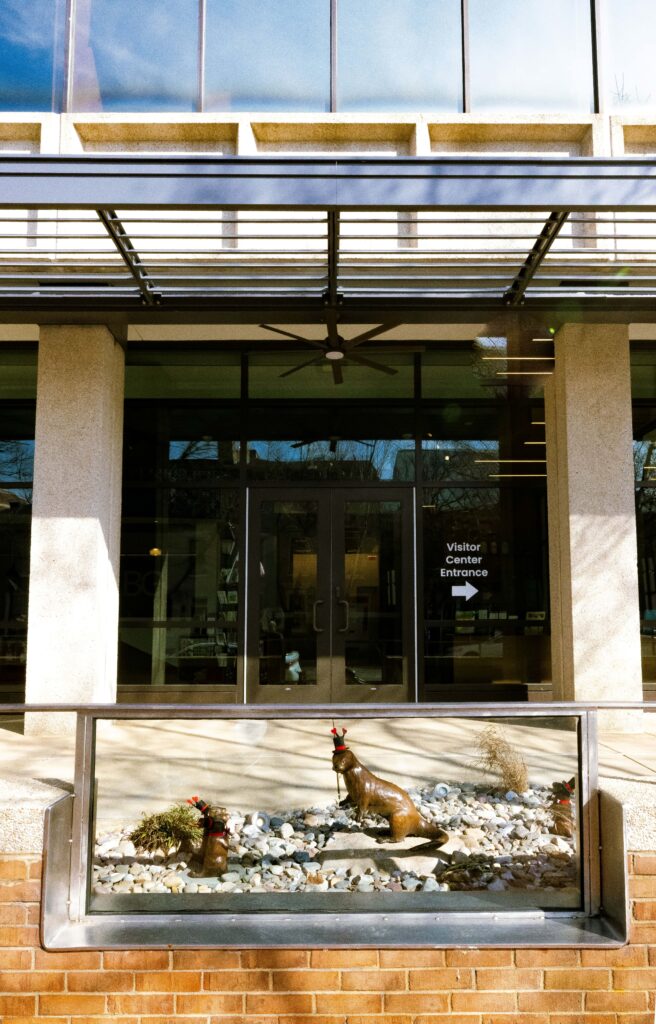
You’ve just arrived in Fredericksburg. You spend some time wandering the brick sidewalks downtown looking for your next stop.
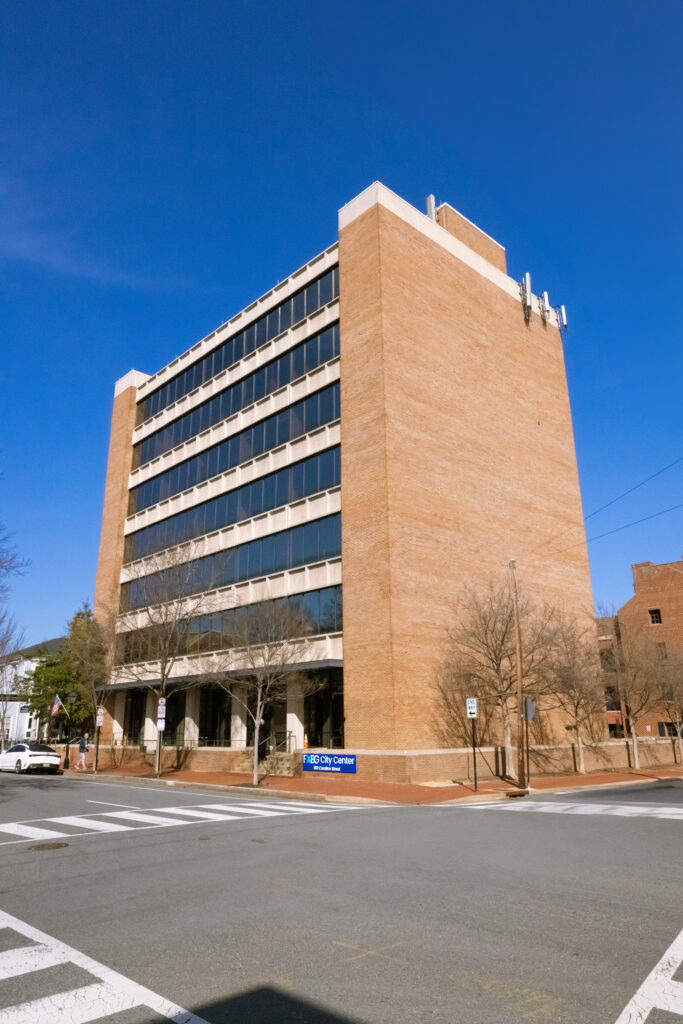
The Visitor Center, its doors open like an invitation. You step inside expecting a quick answer to a question… and something shifts.
The air feels lighter. The space feels calm. The information feels effortless.
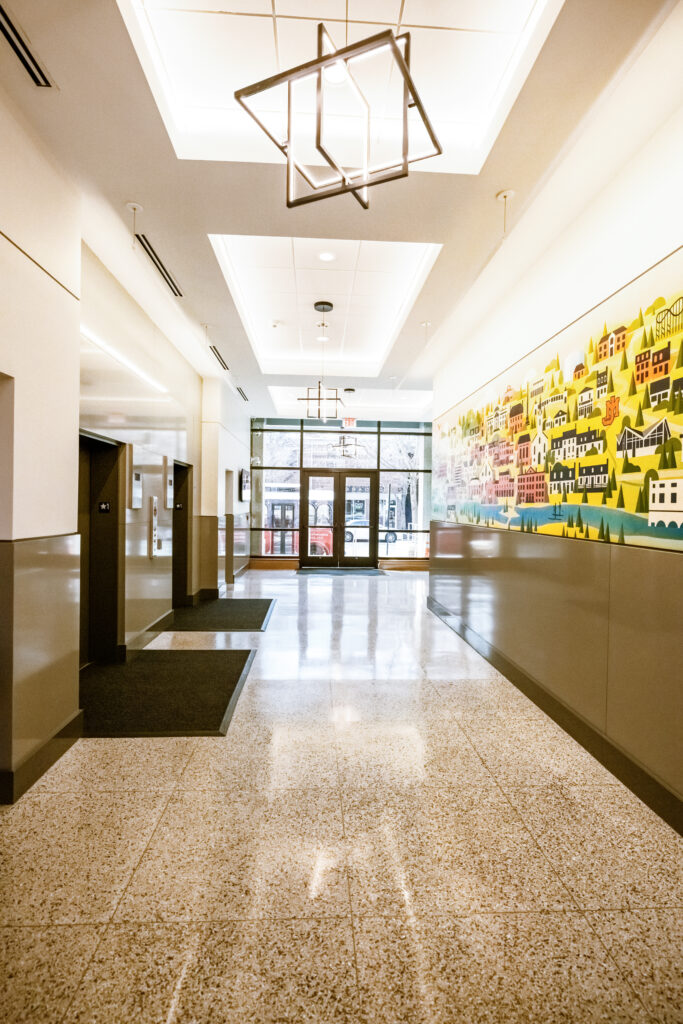
This is the moment we kept returning to as we reimagined the Fredericksburg Visitor Center:
How can we design a place where visitors feel instantly grounded, oriented, and genuinely welcomed?
Because visitor centers are often the first handshake a city offers. They shape impressions long before someone tours a battlefield, finds the perfect lunch spot, or discovers the charm tucked into Fredericksburg’s historic corners. And in a city with such rich layers—Revolutionary crossroads, Civil War history, artistic culture, and a thriving small-business community—the welcome matters.
So we began with the experience.
We walked the site. We listened to stories from staff who know what visitors struggle with and what they’re excited about. We looked at circulation, materiality, daylight, and the natural behavior of someone arriving with limited time and unlimited questions.
And slowly, a new picture emerged.
We envisioned a space that felt rooted in Fredericksburg’s identity yet open to future growth. A place that could guide without overwhelming, invite without clutter, and serve as both a calm landing spot and a launch point for exploration.
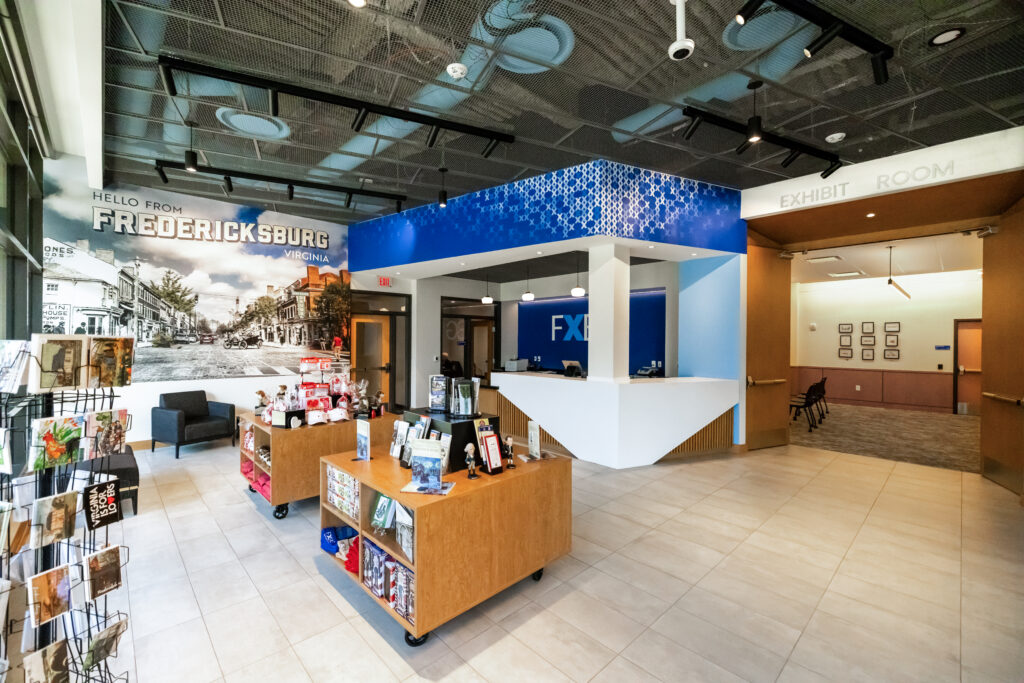
Inside, the redesigned layout clears visual paths and creates intuitive touchpoints—places where travelers can pause, recharge, gather information, or chat with staff. Warmer materials and thoughtful lighting help the space feel more like an extension of downtown’s character than a stand-alone stop. Interactive elements and flexible displays make it easier to highlight what’s happening across the city, from seasonal festivals to local artisans to off-the-beaten-path experiences.
And behind the scenes, small but meaningful improvements give staff the tools to do what they do best:
turn strangers into guests and guests into ambassadors.
But the most rewarding part isn’t the design itself, but what happens when people walk through the door.
Visitors stay a little longer. They ask better questions. They leave more confident, more curious, more connected. They step back outside with not just a plan, but a spark:
“There’s so much here we didn’t know about.”
That’s the impact of a space designed to welcome, orient, and inspire.
Picture this:
Six months from now, a family returns to Fredericksburg because their first visit made an impression they couldn’t shake. They stop by the Visitor Center again—not because they’re lost, but because it’s become part of the experience. A touchpoint of familiarity. A place that makes them feel like locals, even if just for a day.
This is what thoughtful design can do.
It doesn’t just shape spaces.
It shapes how people feel inside them—and how they remember the city long after they’ve gone.